
- Details
Manufacturing is essential to West Virginia’s economy, providing tens of thousands of jobs and more than $4 billion a year in exports. But there’s an import that threatens these West Virginia companies: Class action lawsuits.
That’s why I support the Fairness in Class Action Litigation Act, a bill now pending in Congress that would provide meaningful reforms to an out-of-control system. First of all, FICALA would stamp out “no-injury” lawsuits where lawyers assemble a class of plaintiffs without showing, up front, that they’ve suffered any tangible injuries.
- Details
Below are statements and media coverage on China Energy’s announcement and signed Memorandum of Understanding for $83.7 billion dollar investment in West Virginia. It has been reported that the investment will cover a 15-20 year period and include two natural gas fired power plants (tentatively in Brooke and Harrison counties), a methanol facility, and an ethylene glycol/PGA plant.
Plans also include a two-phase investment in the Appalachian Storage Hub. The first phase is reported to be $4 billion and one of the earliest investments planned, the second phase is said to include an additional $20 billion investment in the hub.
This commitment represents what could become the largest investment ever by a Chinese Company outside of China. Job reports vary, but thousands of constructions jobs and potentially more than 1,000 permanent jobs top early estimates. Additional downstream jobs are expected to number in the thousands.
The WVMA congratulates the administration, our congressional delegation, and industry leaders who have worked and will continue to move this vision forward.
- Details
CHARLESTON, W.Va. – The West Virginia Manufacturers Association (WVMA) is thanking voters for supporting the Roads to Prosperity Amendment and allowing the state to make a major infrastructure investment over the next several years.
“Our members represent a broad spectrum of manufacturing in West Virginia, and we couldn’t be happier with this election result,” said WVMA President Rebecca McPhail. “West Virginia has seen some major manufacturing and economic development news lately, particularly in the automotive sector, so having safe roads and bridges is all too important to us.”
The WVMA was part of a non-partisan coalition of business and labor groups that combined forces for a statewide road bond campaign.
“We have said it many times, but it is worth repeating: Our ability to compete in today’s manufacturing economy relies heavily on our ability to ship and receive products safely and efficiently,” McPhail said. “Now, we can tell companies that are looking at West Virginia for potential investment that our infrastructure finally is going to get the attention it deserves. West Virginia’s future looks even brighter than it did just a couple days ago. The massive infrastructure investment that is going to come from this road bond plan is going to transform our state.”
The WVMA is comprised of more than 175 companies representing a broad range of manufacturing sectors including chemical, food grade, hardwood, steel and automotive manufacturing. Currently, the manufacturing industry employees more than 47,000 West Virginians at competitive wage levels, accounting for nearly 10 percent of the states total output.
- Details
CHARLESTON, W.Va. – The West Virginia Manufacturers Association (WVMA) is celebrating the combined $215 million investments announced by automobile manufactures Hino and Toyota.
Wednesday evening, Hino Motors Manufacturing U.S.A. announced it will make a $100 million investment to expand its truck manufacturing and assembly operations in West Virginia, relocate its operations from Williamstown to the former Coldwater Creek facility in Mineral Wells.
And Tuesday, Toyota Motor Manufacturing West Virginia announced a $115.3 million expansion of their operations to produce the company’s first American-made hybrid transaxles at the company’s plant in Putnam County.
“This has been a banner week for manufacturing in the Mountain State,” said WVMA President Rebecca McPhail. “To have two world-class automobile manufacturers choosing to invest in West Virginia is proof positive that we can provide the workforce and business climate that manufacturers want.”
Both companies have 2020 as the target date to begin operations on their newest investments.
- Details
On August 3, President Trump, who won big in West Virginia — 67.9 percent of the vote vs. Hillary Clinton’s 26.2 percent — held a campaign-style rally at the 9,000-person Big Sandy Superstore Arena in Huntington, West Virginia.
“As you have seen, I have kept my promise as President,” he told attendees.
“We are putting our coal miners back to work. We have ended the war on beautiful, clean coal. We have stopped the EPA intrusion. American coal exports are already up.”
- Details
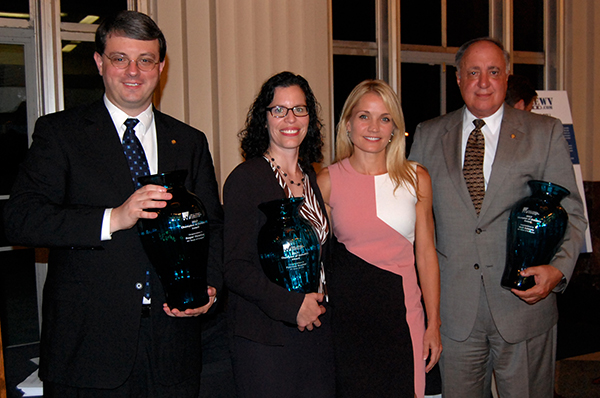 CHARLESTON, W.Va. – The West Virginia Manufacturers Association (WVMA) hosted its third annual all-state legislative meeting Monday and highlighted the work of three legislators as Champions of Industry.
Senator Patricia Rucker, R-Jefferson, and Delegates Roger Hanshaw, R-Clay, and Mark Zatezalo, R-Hancock, were named WVMA Champions of Industry for promoting policies that are conducive to manufacturing.
“The WVMA is pleased to recognize the commitment of our Champions of Industry to the development of policy that fosters an environment of manufacturing growth,” said WVMA President Rebecca McPhail. “Each legislator stood out in their desire to learn about and understand key industry issues, and champion these causes.”