
- Details
A recent survey by the American Energy Alliance shows that likely voters in eight key states want to see elected officials in Washington grow the economy and address inflation rather than focus on climate change. In fact, only 3% identify climate change as the most pressing issue facing our country. Moreover, a majority of voters — including 63% of Republicans — oppose a proposal in Washington to impose a new carbon tax on imported goods.
There is good reason to oppose this measure, called the Foreign Pollution Fee Act, as well as a related measure, called the PROVE IT Act. The idea behind taxing imports based on the carbon emissions in the country of origin may seem reasonable at first. But anyone with a fundamental understanding of economics can tell you that domestic job creators and working Americans are the ones who will actually pay for the increased costs associated with this new tax.
- Details
 The West Virginia Manufacturers Association announced today that an experienced professional in statewide policy and public relations, Dr. Bill Bissett, will take over as president on January 2, 2024.
The WVMA Board of Directors announced Bissett’s position during the association’s 8th Annual Meeting and Winter Convention in Bridgeport. The board selected Bissett to take the reins after its outgoing president, Rebecca McPhail, announced her resignation to join the American Chemistry Council as vice president of state affairs and political mobilization.
“Bill Bissett absolutely is ready to lead the WVMA into the future,” said WVMA Board President Barbara Buck. “There are not many people who could step in and run with the tremendous momentum that we have had under Rebecca’s leadership, but Bill is the right person for the job.”
Bissett’s career began in state government and later with Charles Ryan Associates, an integrated marketing firm located in Charleston. After executive leadership positions with Marshall University, the Kentucky Coal Association and the Huntington Regional Chamber of Commerce, Bissett most recently served as the state director for U.S. Sen. Shelley Moore Capito, R-W.Va.
- Details
Dad was a carpenter. It was a skill he chose to develop. Maybe it was in his genes. He went through a carpentry apprenticeship to help him develop his skills. We lived in a rented row house in Pittsburgh. The landlord decided to sell the property and we had to move. I remember my parents talking in the evening. Mom was in tears. She called every available rental property in the newspaper. At the time I had three younger brothers. Every landlord Mom called asked how many kids they had. As soon as Mom said, “Four boys” they hung up.
My parents’ only choice was to be build a house. My grandfather loaned my parents enough money to buy a lot. They used the lot to get a construction loan. Dad used his carpentry skills and the help of friends and family to do much of the work on the house so he could afford to build it. I couldn’t fully appreciate it as a 7-year old. As an adult I marveled at the quality of Dad’s work. He also used his carpentry skills to do side jobs supporting our family. Dad chose to turn one of his strengths into a career.
- Details
by Rebecca McPhail
Manufacturers are receiving a mixed message from the Biden Administration and its agencies when it comes to American manufacturing. While President Biden touts a pro-manufacturing agenda, chemical manufacturers are facing a surge in unnecessarily restrictive regulations proposed by federal agencies.
Chemistry is a $6.5 billion enterprise in West Virginia, making chemical manufacturing the largest manufacturing sector in the state. Chemical manufacturers in the mountain state pay an average annual wage of $94,000 while generating $65 million in state and local taxes, and $123 million in federal taxes.
- Details
This week, squirrels in my neighborhood are running all over. Our neighborhood has a lot of hickory trees. What’s unusual, they all have nuts in their mouth and aren’t eating them now. Instead they are carrying them up to their tree nests preparing for winter. Preparing for tomorrow is something people can do, like cutting firewood for winter. Having regular health checkups today can avoid more serious problems in the future. Young people attend college, technical school or join a skilled trade as an apprentice to prepare for a career tomorrow. Some people prepare for the challenges of tomorrow by having health care coverage, home owners insurance, retirement savings, a will and so forth.
My friend, Hall of Fame Speaker and author, Willie Jolley had a high school teacher who told him, “Leaders don’t just make decisions for today, they make decisions for tomorrow.” A message that made a big difference in Willie’s life. We should all be making decisions for tomorrow like saving for retirement, eating healthy, not smoking, staying fit and being a person of integrity.
- Details
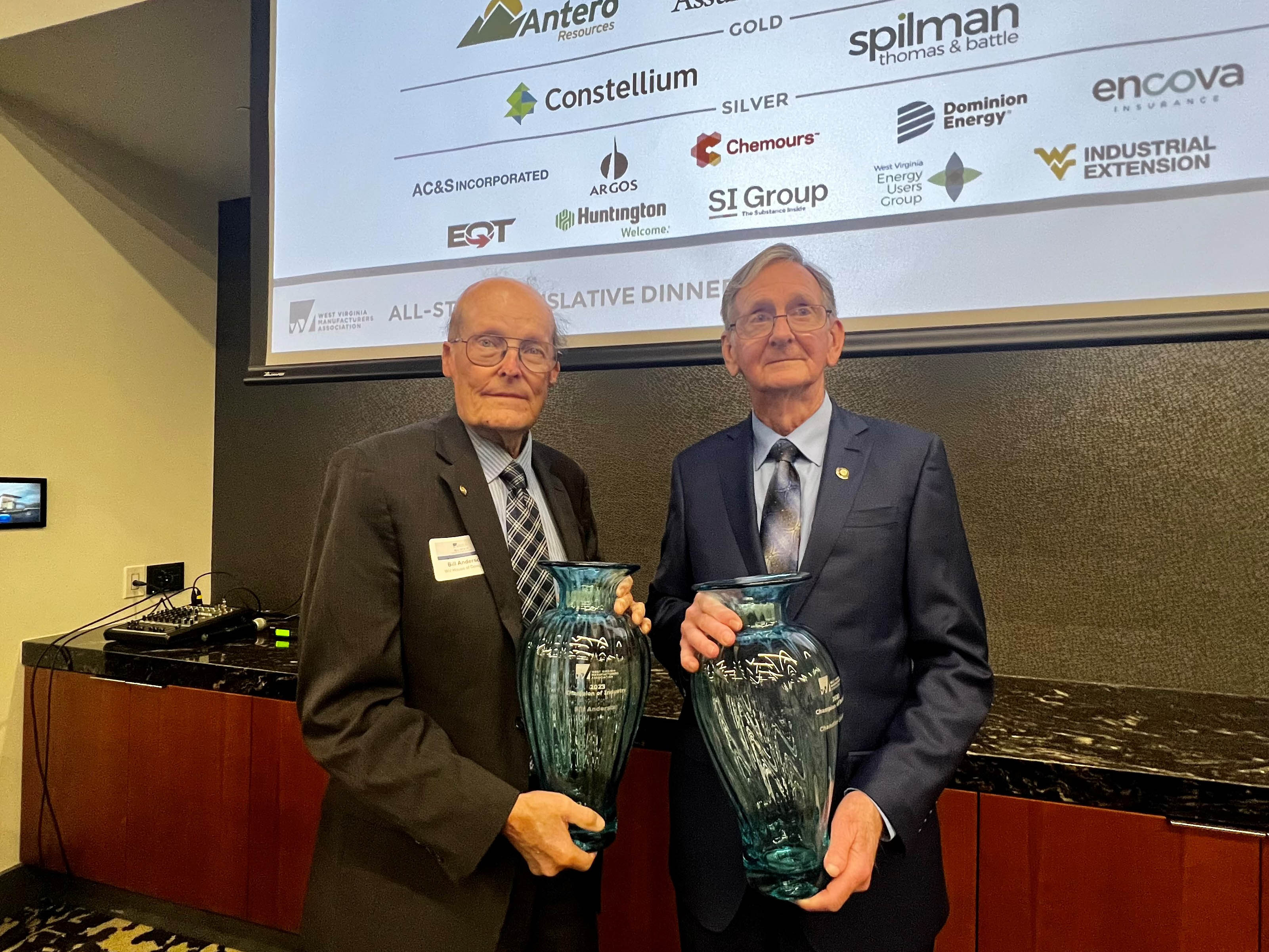
The West Virginia Manufacturers Association (WVMA) has recognized Sen. Chandler Swope, R-Mercer, and Delegate Bill Anderson, R-Wood, as the 2023 Champion of Industry Award recipients at its recent annual All-State Legislative Dinner.
The awards recognize their legislative leadership, outstanding contributions to the manufacturing sector and their unwavering commitment to advancing West Virginia's economic growth. WVMA President Rebecca McPhail said both legislators exemplify the dedication and vision required to foster a thriving industrial landscape in West Virginia.